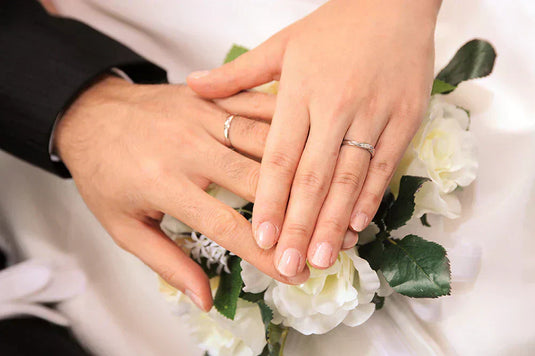
There is a particular kind of pressure that comes with buying an anniversary band. It is not the same pressure as buying an engagement ring - that purchase has its own mythology, its own rules, its own set of expectations. An anniversary band feels different. More personal, somehow. You already know this person. You have built something with them. Hence, the jewelry you choose is supposed to reflect all of that, and most people have very little idea where to start.
This Anniversary Band buying guide exists to make that process less overwhelming. It will give you all the information that actually matters before you walk into a store or start browsing online.
Understanding an Anniversary Band
The term gets used loosely, so it is worth being precise. An anniversary band is a ring - typically a band rather than a solitaire setting - given to mark a wedding anniversary. It is mostly worn alongside the original engagement ring and wedding band, though some women choose to wear it alone or on the opposite hand.
The most traditional version is an eternity band: diamonds or gemstones set all the way around the circumference of the ring. A half-eternity band has stones set only on the front-facing portion. Both are common choices, and the right one depends on practical factors as much as aesthetic ones.
The Milestone Question
There is no rule that says anniversary bands belong only to certain milestones. People give them at one year, five years, ten years, twenty-five years. That said, certain anniversaries do carry cultural weight like the first, the fifth, the tenth, the twenty-fifth, the fiftieth and for many couples, those milestones feel like the natural moments for a more significant gift.
If you are buying a band at the first anniversary, the gesture itself carries much of the meaning. The ring does not need to be elaborate. At the tenth or twenty-fifth, there may be more room to invest in something with real visual impact - a wider band, a more complex setting, a larger center stone if the design includes one.
The milestone determines the budget conversation, and the budget conversation affects everything else. It is worth having that conversation honestly rather than choosing a number arbitrarily and working backward from it.
Metal Choice: What Actually Holds Up
Gold is the most coveted metal for anniversary bands. It is durable, it ages gracefully, and it has a warmth that photographs beautifully at any stage of life. Yellow gold has made a strong comeback in recent years after a long period where white metals dominated. Rose gold attracts buyers who are looking for something slightly softer and more romantic in tone.
Platinum is denser and more durable when compared to gold. Thus, it is a strong choice for someone with an active lifestyle or a job that puts jewelry through real wear. It is also naturally hypoallergenic. The tradeoff is cost - platinum bands typically run higher than comparable gold pieces - and the fact that platinum scratches more visibly, though the scratches can be polished out.
White gold is a middle option: it has the cool, bright look of platinum at a lower price point, though it requires rhodium plating over time to maintain its finish.
The metal you pick should coordinate with the existing rings the band will sit alongside. Most jewelers recommend matching metals when stacking, though mixed-metal looks have become genuinely fashionable and some couples prefer the visual contrast deliberately.
Stone Selection: Diamonds, Colored Stones, and the Lab-Grown Question
Diamonds are the most common choice for anniversary bands, especially in eternity and half-eternity settings. Round brilliant cuts maximize light return and look consistently elegant in a band format. Baguettes and princess cuts create a more geometric, architectural feel. Cushion cuts read as softer and more vintage-inspired.
Lab-Grown Diamonds have shifted the calculus significantly for anniversary band buyers. Chemically and optically identical to mined stones, they typically cost fifty to seventy percent less - which means a buyer who wants a three-quarter carat total weight eternity band can now afford a full carat total weight version for the same budget. The quality difference is not visible to the naked eye. For many couples, the savings make the decision simple.
Colored gemstones are a nice alternative to diamonds, particularly when the stone carries personal significance - a birthstone, a stone associated with a particular anniversary year, or simply a color that holds meaning for the couple. Sapphires, rubies, and emeralds effectively endure everyday wear. Softer stones like opal or aquamarine require more care.
If you want to see how different stone choices look in real settings before committing, browsing a curated collection helps. The Shop My Band anniversary bands collection presents a range of stone and metal combinations in actual ring settings, which makes it easier to understand how a choice translates from description to physical object.
Sizing and Fit: The Details That Matter More Than People Expect
Finger size changes over time. Temperature, hydration, weight fluctuations, and even the time of day influence how a ring fits. A ring sized at twenty-five may not fit perfectly at forty, and that is completely normal.
When Buying an Anniversary Band, get sized at a jeweler rather than relying on old ring measurements. If you are buying as a surprise, a jeweler can often size from a ring the person already wears regularly - just bring it in.
Comfort fit bands - which have a slightly domed interior rather than a flat one - are worth considering for everyday wear. The reduced contact between the metal and the inner finger makes a real difference over hours of wear.
Wrapping Up
An anniversary band sits on a finger alongside existing rings, through daily life, through seasons, through years.
That daily reality should shape every decision: the metal, the stone choice, the width of the band, the setting style. A person who works with their hands needs something lower-profile than someone in an office setting. A person who already wears yellow gold should not receive white gold unless that contrast is intentional and wanted.
Shop My Band anniversary bands collection is organized to help with exactly this kind of decision - filtering by metal, style, stone type, and price range so that finding something suited to a specific person and a specific life is less of a guessing game.
Buy something the person will actually wear. That is the only measure of success that matters.